Introduction
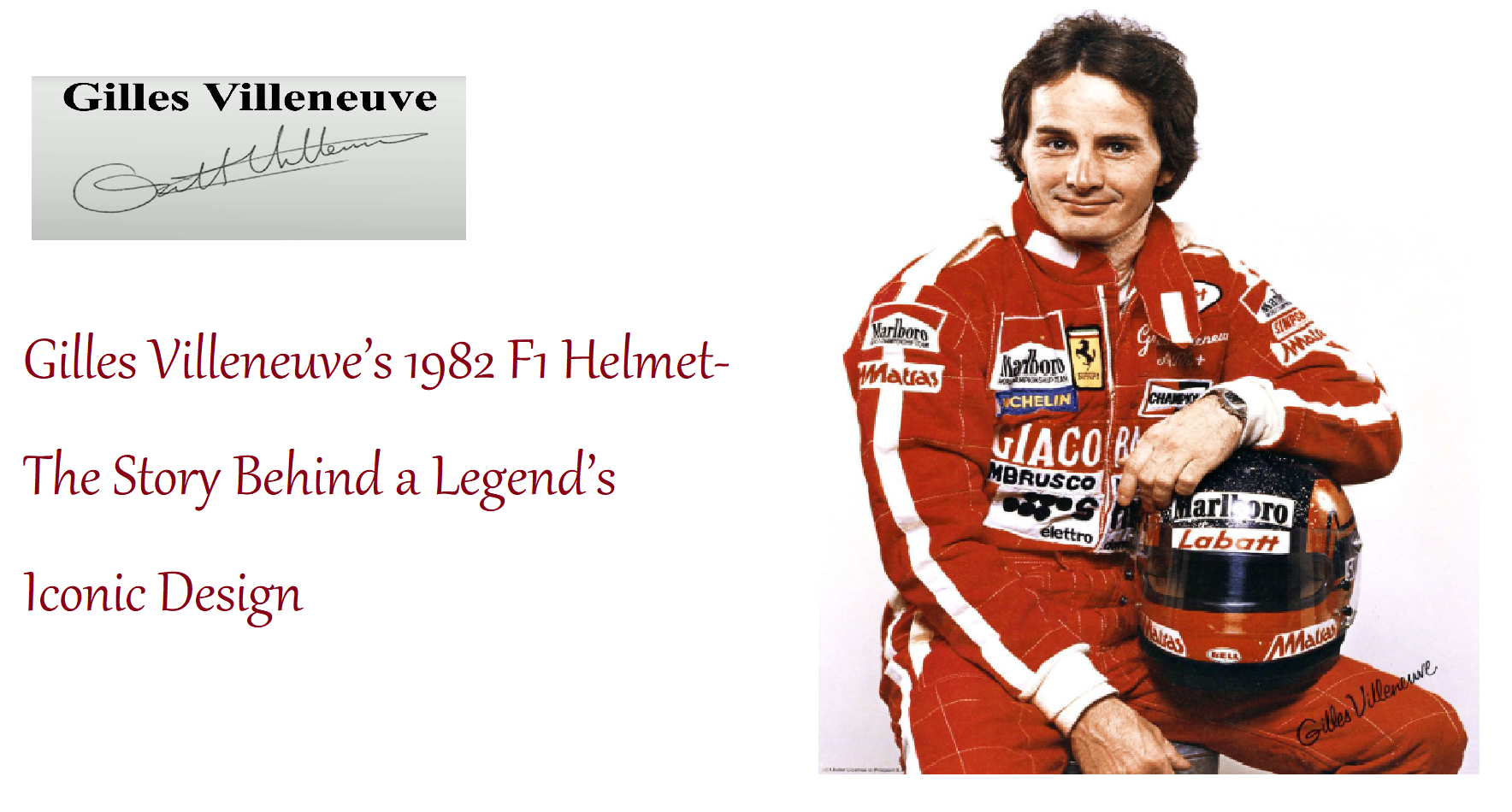
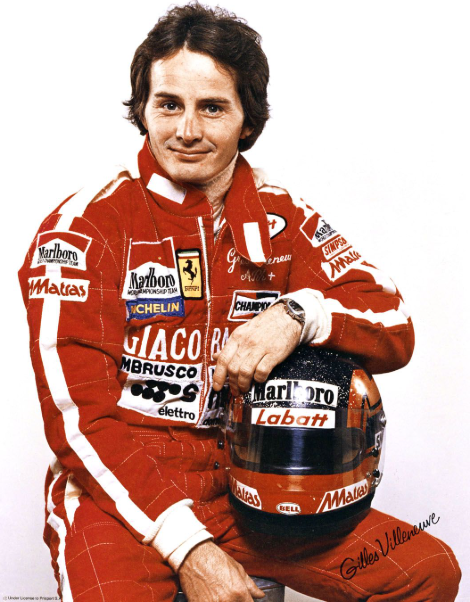
Gilles Villeneuve’s helmet is one of the most recognizable in Formula 1 history. While the Canadian driver’s aggressive, fearless driving style made him a fan favourite, his simple yet bold helmet design became a symbol of his personality – fast, uncomplicated, and instantly identifiable. In 1982, Villeneuve wore that same iconic Bell helmet for what would tragically be his final season with Scuderia Ferrari. This blog explores the design, history, and enduring legacy of the helmet he wore during those last months.
Expanded History: Gilles Villeneuve’s 1982 Helmet
Evolution of the Helmet Design (1977–1982)
Villeneuve’s helmet design remained remarkably consistent during his entire Ferrari career, but small changes occurred each year. Here’s a year‑by‑year breakdown:
- 1977 (McLaren → Ferrari mid‑season): White base, broad red central stripe, thin blue side stripes. Minimal sponsor decals.
- 1978: Slightly narrower red stripe. The blue side stripes become more angular. Bell logo appears prominently on the front.
- 1979: The red stripe is now a crisp band from the visor opening to the rear. The blue stripes are thicker. Villeneuve added a small Canadian flag on the back.
- 1980: The helmet gained more sponsor decals (Agip, Champion, Magneti Marelli) on the sides. The blue stripes were refined.
- 1981: The design was at its cleanest. The red stripe was medium width, and the blue stripes sat neatly under the ear area.
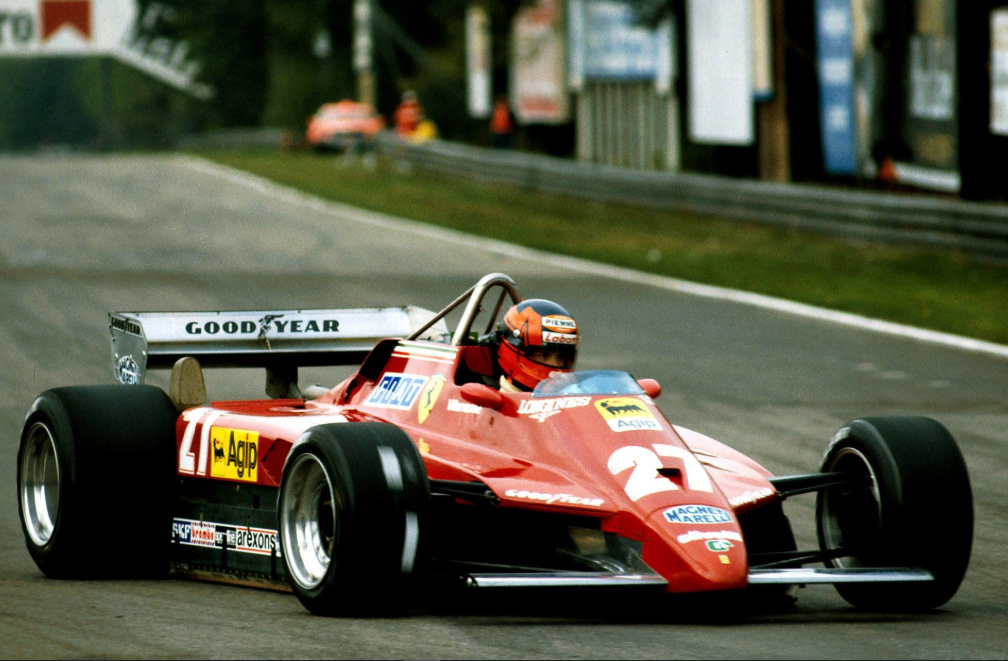
- 1982: Essentially the same as 1981, but the blue stripes were slightly longer, reaching toward the rear. The helmet had a clear anti‑fog visor and a more integrated look with the new Ferrari 126C2’s livery.
The consistency of the design made it iconic. In an era when many drivers frequently changed helmet colours, Villeneuve’s helmet was always instantly recognizable.
The Helmet’s Role in the 1982 Season
The 1982 season was turbulent for Ferrari. Villeneuve started with a win at the Brazilian Grand Prix, but the relationship with teammate Didier Pironi soured at the San Marino Grand Prix after Pironi ignored team orders and overtook Villeneuve for the win. Villeneuve felt betrayed and reportedly refused to speak to Pironi afterwards.
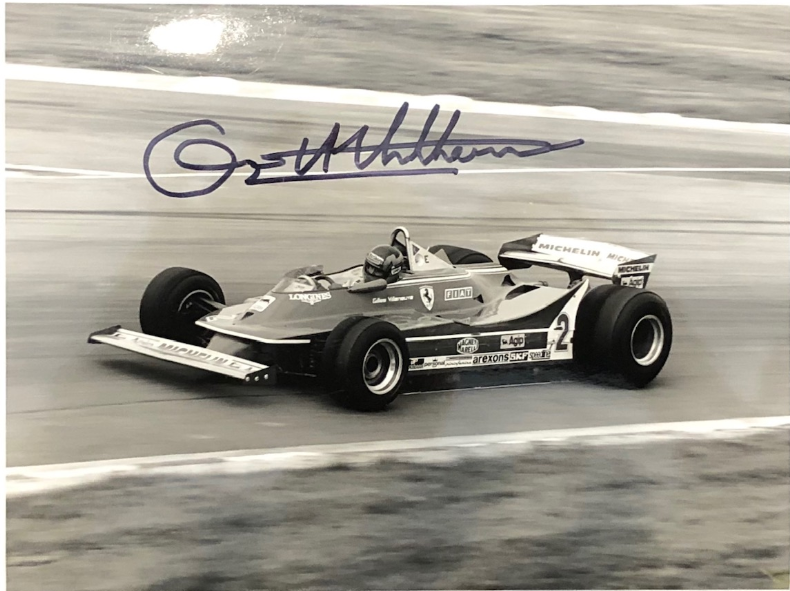
At the Belgian Grand Prix in Zolder, Villeneuve was pushing hard in qualifying to beat Pironi’s time. On his final attempt, he came over a blind crest and hit the back of Jochen Mass’s slower March. The Ferrari launched into the air, nose‑first, and Villeneuve was thrown from the cockpit. His helmet came off during the violent impact, a sobering reminder of the safety standards of the era.
The helmet he wore that weekend – white, red, and blue – was the last one he ever used. It is now one of the most significant artefacts in Formula 1 history.
Technical Details and Decals
In 1982, Villeneuve’s helmet was believed to be a Bell XFM‑1 (or a slightly later Bell model). The shell was made of fibreglass, painted white, with hand‑applied stripes. The specific decals on the helmet included:
- Agip (Italian oil company) – on both sides.
- Magneti Marelli – below the visor.
- Champion (spark plugs) – on the chin area.
- Personal Canadian flag – on the rear.
- Bell helmet logo – front and sides.
The visor was a clear, manually operated shield, often with a light‑blue tint for glare reduction. The helmet had a fire‑retardant Nomex lining and a quick‑release chinstrap.
The Helmet’s Legacy and Influence
Villeneuve’s helmet design has been immortalized in many ways:
- Jacques Villeneuve’s Tribute: Jacques’ helmet from 1996 onwards featured a red “V” on a white background, directly inspired by his father. When Jacques won the 1997 World Championship, he wore a special version that closely mirrored Gilles’ classic red‑stripe design.
- Replicas and Tributes: Many modern drivers have run one‑off helmet designs at the Canadian Grand Prix to honour Gilles. Examples include Charles Leclerc’s 2019 Canadian GP helmet and Lance Stroll’s 2020 tribute.
- Museum Display: The actual 1982 helmet, along with other Villeneuve memorabilia, is displayed at the Museo Ferrari in Maranello. It draws thousands of fans each year.
- Motorsport Art: The helmet is a popular subject in paintings, scale models, and graphic design. Its simple colours make it instantly recognizable even to non‑F1 fans.
The Helmet Design in 1982
Throughout his Ferrari years, Gilles Villeneuve’s helmet remained nearly unchanged. It was a Bell Star model, painted in a clean white base with a red stripe running from the front visor area over the top to the back, and two blue side stripes near the bottom edges. The combination of red, white, and blue – the colours of Canada – was simple but striking, especially against the scarlet Ferrari car.
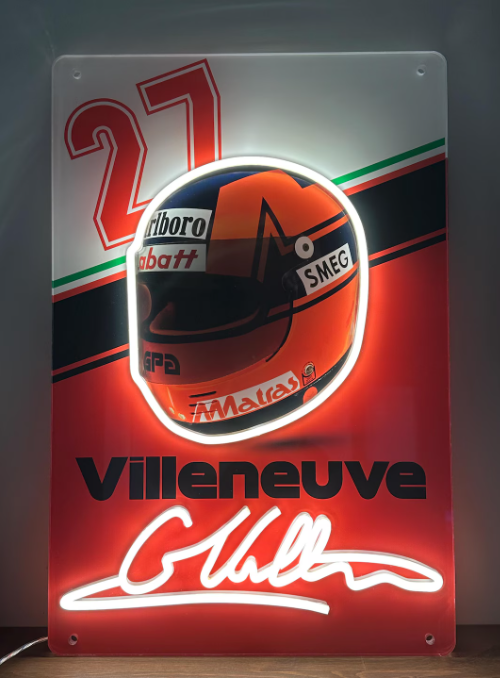
In 1982, the helmet featured minor updates. The red stripe was slightly narrower than in earlier years, and the blue side stripes had a sharper angle. The visor was a clear or lightly tinted shield, and the helmet displayed small sponsor decals (like Agip and Magneti Marelli) on the sides and chin area. Villeneuve’s design was deliberately minimalist – no complicated graphics or flashy patterns – which made it timeless.
The Story Behind the Colours
Villeneuve first used this helmet design when he joined Ferrari in 1977. He wanted a design that represented his Canadian heritage. The red stripe symbolized his passion and speed; the blue stripes represented the lakes and sky of his homeland; the white background stood for the snow of Quebec winters. It was personal and patriotic without being overly complex.
Interestingly, his son Jacques Villeneuve would later adopt a similar but distinct helmet design with a red “V” shape on a white background, paying homage to his father. Jacques’ 1997 World Championship helmet was directly inspired by Gilles’ classic look.
The 1982 Season and Tragic Loss
The 1982 season was one of the most controversial and emotional in Ferrari’s history. Villeneuve started strongly, but tensions with teammate Didier Pironi boiled over at the San Marino Grand Prix. During qualifying for the Belgian Grand Prix at Zolder on 8 May 1982, Villeneuve collided with the slower March of Jochen Mass. His Ferrari was launched into the air, and he was thrown from the car. Despite immediate medical attention, Gilles Villeneuve died that evening.
He was wearing the same helmet that had become his trademark – white, red, and blue. The helmet was recovered from the accident scene, and today it remains one of the most poignant artefacts in motorsport history. His death sent shockwaves through the racing world, and he is remembered as one of the greatest pure racers of all time.
Helmet Specifications and Brand
For the 1982 season, Villeneuve used a Bell XFM-1 or possibly an updated Bell Star model. Bell helmets were the dominant brand in F1 at the time. The helmet was constructed of fibreglass with a foam interior, meeting the FIA safety standards of the early 1980s. It weighed approximately 1.5 kg and featured a small peak? Actually, no peak – F1 helmets of that era were full-face but without the aerodynamic attachments seen today. The visor was manually operated, and the helmet had a chinstrap with a quick-release buckle.
The exact helmet he wore in 1982 is now displayed at the Ferrari Museum in Maranello, a powerful reminder of his legacy.
Frequently Asked Questions
- What helmet did Gilles Villeneuve wear in 1982?
He wore a Bell helmet, most likely the Bell XFM-1 or Star model, painted white with a red central stripe and blue side stripes. - Did his helmet design change over the years?
Very little. The design remained essentially the same from 1977 to 1982, with only minor variations in stripe width and decals. - Where is the 1982 helmet now?
The helmet is preserved at the Ferrari Museum in Maranello, Italy, as part of their Gilles Villeneuve memorial collection. - Why did he choose those colours?
The white, red, and blue represented his Canadian identity – snow, passion, and lakes/sky. - Did Jacques Villeneuve use the same helmet design?
Jacques used a similar but distinct design with a red “V” and white background, clearly inspired by his father’s helmet. - Was the helmet damaged in the accident?
The helmet suffered damage during the crash, but it was recovered and retained as a historical artefact.
Related Articles
If you enjoyed this story, here are a few more pieces of motorsport history and manual guides from productsmanuals.com that you might find interesting:
- GTA 6 Release Date, Price & Pre-Order Guide-Everything You Need to Know
Explore the release date of GTA 6 with detailed instructions. - Sony A7 IV Manual And Complete Setup Settings and Hidden Features Guide
Capture your own racing moments with this rugged camera. - DJI Mini 4 Pro Manual – Drone Flight & Camera Tips
Get aerial shots of your favourite tracks with this compact drone.
Browse all guides at productsmanuals.com .
Copyright Warning ⚠
Copyright 2026 productsmanuals.com All rights reserved. This article on Gilles Villeneuve’s 1982 F1 helmet is original content and may not be copied, republished, or redistributed without written permission. Ferrari, Bell, and all related trademarks are the property of their respective owners. This article is unofficial and not affiliated with Ferrari or Bell.
